New research study investigating a treatment for Idiopathic Generalized Epilepsy

If you still experience seizures despite taking medications, there is a new epilepsy clinical study available for individuals 12 years and older with hard-to-treat idiopathic generalized epilepsy (also called primary generalized epilepsy).

Find out if you could be eligible for the NAUTILUS Study.

Take the Quiz

Doctor looking happily at a patient with a paint brush and palette

About IGE Epilepsy | NAUTILUS Study | The RNS® System | FAQ

What is Idiopathic Generalized Epilepsy (IGE)?

Individuals with idiopathic generalized epilepsy can experience generalized tonic clonic seizures (also known as convulsions or grand mal seizures), myoclonic seizures, and absence seizures.

Idiopathic means that your doctor cannot find anything in your brain that is causing your seizures. Generalized epilepsy is when seizures affect both sides of your brain at the same time.

SEE IF YOU COULD BE ELIGIBLE FOR A CLINICAL STUDY TO TREAT IGE

About the NAUTILUS Study

graphic of brain with stylized brainwave

The NAUTILUS research study is evaluating the safety and effectiveness of thalamic stimulation with the NeuroPace RNS System as an additional treatment in reducing the frequency of primary generalized seizures in people 12 years and older with drug-resistant idiopathic generalized epilepsy.

Specifically, this study will involve participants with IGE whose seizures have not been controlled by antiseizure medications and who currently have generalized tonic clonic seizures, with or without myoclonic or absence seizures.

lf you have been diagnosed with IGE and still have seizures after trying 2 or more anti-seizure medications, you may be eligible for the NAUTILUS Study.
Take the Quiz

CAUTION—Investigational device. Limited by United States law to investigational use for the following Indications for Use: The RNS® System is intended for thalamic stimulation as an adjunctive therapy for the treatment of primary generalized seizures in individuals 12 years of age or older who have drug-resistant idiopathic generalized epilepsy.

If your current epilepsy treatment is not working, a clinical study of neurostimulation for drug-resistant IGE may be an option

What is Drug-Resistant Epilepsy?

If you have tried at least two anti-seizure medications and still experience seizures, you may have drug-resistant epilepsy. Doctors may also refer to this type of epilepsy as refractory, intractable, hard-to-treat, or uncontrolled seizures.

30% of people with epilepsy still experience uncontrolled seizures despite taking anti-seizure medicine. lf your current epilepsy treatment is not working, you are not alone. A clinical study investigating responsive neurostimulation to treat drug-resistant idiopathic generalized epilepsy may be an option.

graphic of three pills
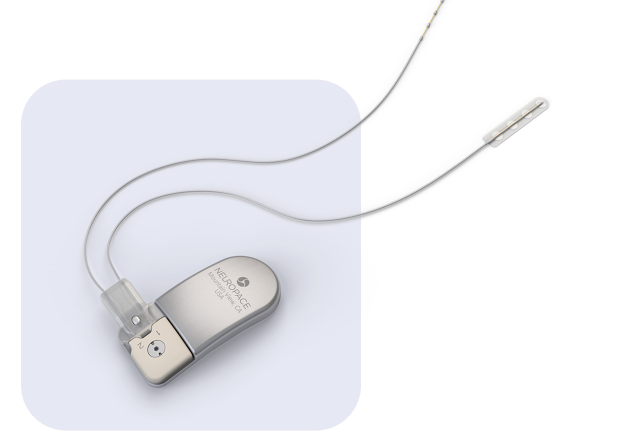
RNS product image

What is the RNS System?

The RNS System is a medical device that is FDA approved for the treatment of drug-resistant focal epilepsy (also called partial onset epilepsy). The RNS System consists of an implantable neurostimulator and small wires (called leads). In the NAUTILUS study, one lead will be placed in the left side of the brain within an area called the centromedian nucleus of the thalamus, and the other lead will be placed in the right centromedian nucleus of the thalamus. Once placed, the device is designed to be unnoticed by others.

How Does the RNS System Work?

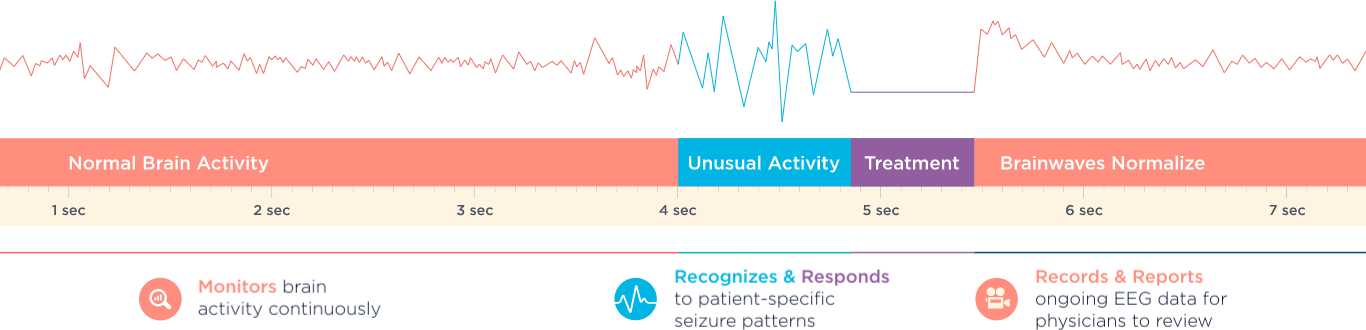
  • It monitors brain activity continuously
  • It is programmed to recognize and respond to your brain patterns, sending brief stimulation to help prevent seizures before they start.
  • It records and reports your EEG information for your doctor to review.
How the RNS System Works
swipe left or right

Ready to see if you may be eligible?

Take the Quiz

Drawing of hand checking off boxes on a checklist

FAQs

Why is this study being done?

The RNS System is already approved by the FDA to treat some types of focal epilepsy, but it has not been approved for other types of epilepsy. The purpose of the NAUTILUS Study is to see if the RNS System is safe and effective (works well) as an additional treatment in reducing the frequency of primary generalized seizures in individuals 12 years and older who have drug-resistant idiopathic generalized epilepsy.

How long will I be in this study?

You will be in the NAUTILUS Study for 2 years after you are implanted with the RNS System.

What are my responsibilities if I take part in this study?

If you are enrolled in the NAUTILUS Study, you will be asked to do the following:

  • Enter your seizure information in an electronic diary every day.
  • Attend all study visits (3-4 times per year) for 2 years and complete all study activities. The first year the study doctor will see you in-person for appointments, and in the second year, some of your visits may be done in-person, by telehealth or by telephone.
  • Tell the study team about any side effects, illnesses and injuries (including hospitalizations) you have while you are in the study.
  • Use the NeuroPace Remote Monitor as instructed to send information from your device to your doctor.
Share Tweet Share Pin

Thanks for your interest in the NAUTILUS Study, which is to find out whether the NeuroPace RNS® System is safe and effective (works well) as an additional treatment for drug-resistant, idiopathic generalized epilepsy in individuals 12 years of age and older.

There are specific criteria to enroll in this study and your answers to this quiz will let NeuroPace know whether you might meet these criteria. 
Are you answering this Quiz as a parent or guardian of a teen at least 12 years of age?
Note that throughout, “you” may pertain directly to you, or to an individual under 18 for whom you have legal authority to provide the information. If so, you (or your parent or guardian if under 18 years of age) will be contacted by a study representative who will ask some additional questions and answer any questions you have. 


How old are you?
Have you been diagnosed with epilepsy?
Do you experience primary generalized seizures including tonic clonic seizures with or without myoclonic or absence seizures?
How many anti-seizure medications have you tried?
Do you have idiopathic generalized epilepsy?
Idiopathic generalized epilepsy means that there is no known cause, or that the cause is thought to be genetic, and seizures start on both sides of the brain all at once. Sometimes this is called primary generalized epilepsy. 
Based on these responses, you may be a candidate for the Nautilus Study.  Are you interested in being contacted to learn more about the Nautilus Study?
Enter your information to learn more about the Nautilus Study. If answering on behalf of your teen, please enter your own information. 


By clicking ‘FINISH QUIZ’, you are agreeing to the terms of our Privacy Policy. You also acknowledge and agree to receiving communications from NeuroPace through the contact information you have provided above. You can unsubscribe at any time.
Unfortunately, it appears the potential study participant is not an appropriate candidate for the Nautilus Study.
The study is evaluating the safety and effectiveness of the NeuroPace RNS® System as an additional treatment for drug-resistant, idiopathic generalized epilepsy in individuals 12 years of age and older. We suggest you discuss potential treatment options with your physician.
You appear to be a potential Nautilus Study participant. 
Unfortunately, since you are a minor, we cannot ask you for your contact information without permission from your parents or guardian.

Please click "FINISH QUIZ" then have your parent or legal guardian complete a new quiz.


Step 1 of 7

14%
    The RNS System is for individuals 18 and older who have focal epilepsy and have tried two or more medications without finding seizure control.
  • Based on your answers, your patient might benefit from the RNS System.

    Get your profile and a list of questions to ask your doctor.

  • Unfortunately it appears your patient is not an appropriate candidate for the RNS® System at this time.

  • The RNS® System is intended for patients who have undergone diagnostic testing that localized no more than 2 epileptogenic foci.

    If your patient has not undergone diagnostic testing, search here to find a comprehensive epilepsy center that can evaluate your patient, including determining if the RNS System is right for them.

  • If you are interested in learning more about the RNS® System, you can have an RNS® System professional contact you by filling out the form below:

  • By filling out this form, you are agreeing to the terms of our privacy policy. This form is intended for US residents only.

    By clicking submit, you are agreeing to receive communications from NeuroPace. You can unsubscribe at any time.

    * Required fileds

Share your Story: Terms and conditions

By filling out the form and submitting your story (and/or photograph), you are agreeing to the following:

  1. NeuroPace may review the information and any photographs you provide for potential publication on our website.
  2. If NeuroPace decides to use your story, we will contact you and ask you to sign a release for a version of your story to be used on the NeuroPace website, Facebook, Instagram, Twitter and/or LinkedIn. Unless you sign the release, we will not publish the story, your name, or the photographs you provided.
  3. Regardless of whether we publish your story, we will add your name and e-mail address to the NeuroPace email list to hear from us about product updates, upcoming events and other relevant information. We will not sell your information to third parties. 
  4. Our use of your information is subject to our Privacy Policy, which you can access here.
neuropace logoLogo Header Menu
  • Patients
  • Providers
  • Corporate
  • PDMS
  • nSight
  • Take the Quiz