
What is drug-resistant epilepsy?

Skip to main content
NeuroPace, Inc.
  • Patients
  • Providers
  • Corporate
  • PDMS
  • nSight
  • Take the Quiz
  • Learn About the RNS System
    • Drug-Resistant Epilepsy
    • The RNS System
  • See if you Qualify
    • Take the Quiz
    • Find a Center
  • Hear from Patients
    • Patient Stories
    • How Data Helped
  • Resources
    • Find a Center
    • Education (brochures, infographics, videos)
    • Helpful Links
    • Contact Us
  • Blog
  • Active Clinical Trials
  • Current Patients
    • Manuals
    • MRI Safety
    • How-to Videos
    • Living with the RNS System
    • Current Patient FAQ
  • Learn About the RNS System
    • Drug-Resistant Epilepsy
    • The RNS System
  • See if you Qualify
    • Take the Quiz
    • Find a Center
  • Hear from Patients
    • Patient Stories
    • How Data Helped
  • Resources
    • Find a Center
    • Education (brochures, infographics, videos)
    • Helpful Links
    • Contact Us
  • Blog
  • Active Clinical Trials
  • Current Patients
    • Manuals
    • MRI Safety
    • How-to Videos
    • Living with the RNS System
    • Current Patient FAQ
Press enter to begin your search
Could the RNS System be right for me? Start Quiz

What is drug-resistant epilepsy?

Graphic of a group of people, some of whom are indicated to have been diagnosed with epilepsy

Drug-resistant epilepsy, also known as intractable epilepsy or refractory epilepsy, is defined as the failure of at least two anti-seizure drugs.

Approximately 1 in 26 people in the U.S. will be diagnosed with epilepsy in their lifetime. Out of the people living with epilepsy, more than 1 million Americans still experience seizures despite taking anti-seizure medication.

If you or a loved one have tried two medications, there is less than a 5% chance that a third medication will control your seizures.

Chen, Z. et. al. JAMA Neurology, 2018

Focal Epilepsy vs. Generalized Epilepsy

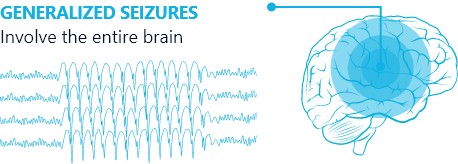
Seizures are generally described as either focal seizures (partial onset) or generalized seizures based on where and how they begin.

  • Focal seizures begin with an electrical discharge in one or two parts of the brain referred to as the seizure focus. While it starts in one area, it can spread to or involve other areas as well (“secondary generalized”).
  • Generalized seizures begin with widespread electrical discharge that involves the entire brain at once.
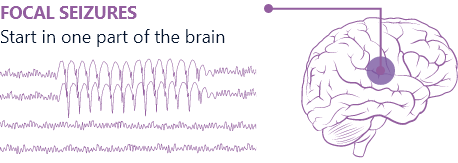
Focal seizures vs. generalized seizures
Generalized seizures
Focal seizures vs. generalized seizures
Generalized seizures

Focal Epilepsy vs. Generalized Epilepsy

Seizures are generally described as either focal seizures (partial onset) or generalized seizures based on where and how they begin.

  • Focal seizures begin with an electrical discharge in one or two parts of the brain referred to as the seizure focus. While it starts in one area, it can spread to or involve other areas as well (“secondary generalized”).
  • Generalized seizures begin with widespread electrical discharge that involves the entire brain at once.
man and woman studying on laptop

Why find the right drug-resistant epilepsy treatment for you?

Living with uncontrolled seizures, or drug-resistant epilepsy, can have several risks including:

  • Epilepsy-related injury
  • Increased emotional and behavioral problems
  • Memory problems
  • Poorer occupational outcomes
  • Increased risk of side effects to multiple anti-seizure medications
  • Increased risk of Sudden Unexpected Death in Epilepsy (SUDEP)1

What is SUDEP?

SUDEP is defined as a sudden unexpected death of an individual with epilepsy who was otherwise healthy.1

Each year 1 in 150 people with uncontrolled seizures die from SUDEP.

Tomson, et al., Lancet Neurology, 2008

Drug-Resistant Focal Epilepsy Treatment Options

Epilepsy Surgery Neuromodulation Devices
Resective Surgery Laser Ablation2 VNS Therapy3 & DBS Therapy2 The RNS® System
Targets the source of your seizures  
Preserves brain tissue    
Adjustable therapy    
Recognizes and responds to brain activity      
slide 1 of 4
Neuromodulation Devices
The RNS® System
Targets the source of your seizures
Preserves brain tissue
Adjustable therapy
Recognizes and responds to brain activity
Neuromodulation Devices
VNS Therapy3 & DBS Therapy2
Targets the source of your seizures  
Preserves brain tissue
Adjustable therapy
Recognizes and responds to brain activity  
Epilepsy Surgery
Laser Ablation2
Targets the source of your seizures
Preserves brain tissue  
Adjustable therapy  
Recognizes and responds to brain activity  
Epilepsy Surgery
Resective Surgery
Targets the source of your seizures
Preserves brain tissue  
Adjustable therapy  
Recognizes and responds to brain activity  

1. Epilepsy Foundation Website, 2021. 2. Medtronic Website, 2021. 3. LivaNova Website, 2021.

  • Safety Information
  • Legal
  • Privacy Policy
1-866-726-387624-hr Support Line

PATIENTS

  • Drug-Resistant Epilepsy
  • The RNS System
  • Hear from Patients
  • Is It Right for You?
  • Current Patients
  • Resources

PROVIDERS

  • Product
  • Clinical Benefits
  • Actionable Insights
  • Patient Selection
  • Education & Training
  • Resources

ABOUT US

  • In The News
  • Press Releases
  • Leadership
  • Careers
  • Contact Us
  • FCOI Procedure
  • PATIENTS

    Safety
  • PROVIDERS

    Legal
  • INVESTORS

    Privacy Policy
  • ABOUT US

1-866-726-3876 24-hr Support Line

© 2026 NeuroPace, Inc..

Step 1 of 7

14%
    The RNS System is for individuals 18 and older who have focal epilepsy and have tried two or more medications without finding seizure control.
  • Based on your answers, your patient might benefit from the RNS System.

    Get your profile and a list of questions to ask your doctor.

  • Unfortunately it appears your patient is not an appropriate candidate for the RNS® System at this time.

  • The RNS® System is intended for patients who have undergone diagnostic testing that localized no more than 2 epileptogenic foci.

    If your patient has not undergone diagnostic testing, search here to find a comprehensive epilepsy center that can evaluate your patient, including determining if the RNS System is right for them.

  • If you are interested in learning more about the RNS® System, you can have an RNS® System professional contact you by filling out the form below:

  • By filling out this form, you are agreeing to the terms of our privacy policy. This form is intended for US residents only.

    By clicking submit, you are agreeing to receive communications from NeuroPace. You can unsubscribe at any time.

    * Required fileds

Share your Story: Terms and conditions

By filling out the form and submitting your story (and/or photograph), you are agreeing to the following:

  1. NeuroPace may review the information and any photographs you provide for potential publication on our website.
  2. If NeuroPace decides to use your story, we will contact you and ask you to sign a release for a version of your story to be used on the NeuroPace website, Facebook, Instagram, Twitter and/or LinkedIn. Unless you sign the release, we will not publish the story, your name, or the photographs you provided.
  3. Regardless of whether we publish your story, we will add your name and e-mail address to the NeuroPace email list to hear from us about product updates, upcoming events and other relevant information. We will not sell your information to third parties. 
  4. Our use of your information is subject to our Privacy Policy, which you can access here.
neuropace logoLogo Header Menu
  • Patients
  • Providers
  • Corporate
  • PDMS
  • nSight
  • Take the Quiz