Current Patients

Skip to main content
NeuroPace, Inc.
  • Patients
  • Providers
  • Corporate
  • PDMS
  • nSight
  • Take the Quiz
  • Learn About the RNS System
    • Drug-Resistant Epilepsy
    • The RNS System
  • See if you Qualify
    • Take the Quiz
    • Find a Center
  • Hear from Patients
    • Patient Stories
    • How Data Helped
  • Resources
    • Find a Center
    • Education (brochures, infographics, videos)
    • Helpful Links
    • Contact Us
  • Blog
  • Active Clinical Trials
  • Current Patients
    • Manuals
    • MRI Safety
    • How-to Videos
    • Living with the RNS System
    • Current Patient FAQ
  • Learn About the RNS System
    • Drug-Resistant Epilepsy
    • The RNS System
  • See if you Qualify
    • Take the Quiz
    • Find a Center
  • Hear from Patients
    • Patient Stories
    • How Data Helped
  • Resources
    • Find a Center
    • Education (brochures, infographics, videos)
    • Helpful Links
    • Contact Us
  • Blog
  • Active Clinical Trials
  • Current Patients
    • Manuals
    • MRI Safety
    • How-to Videos
    • Living with the RNS System
    • Current Patient FAQ
Press enter to begin your search
Could the RNS System be right for me? Start Quiz

Starting your Journey with the RNS® System

Use these resources to help you navigate your journey with epilepsy and the RNS System.

Scroll To:

  • Post-Op Guide
  • RNS System Q&A
  • Collecting RNS Data
  • Manuals and Safety
  • FAQs

Life with the RNS System

Congratulations on taking an important step in the treatment of your epilepsy. The RNS System is a personalized treatment to help prevent seizures at their source. Your journey with the RNS System begins here.


Get Post-op Guide

woman scanning her head

Life with the RNS System

Congratulations on taking an important step in the treatment of your epilepsy. The RNS System is a personalized treatment to help prevent seizures at their source. Your journey with the RNS System begins here.

Get Post-op Guide

Patients Living with RNS

Living with the RNS System Q&A

Join a free webinar about living with the RNS System. An epilepsy specialist and a patient living with the RNS System will be available to answer your questions.

Register

How to collect and share data with your doctor

You play an important role in your epilepsy care. By collecting and sending information from your RNS device (neurostimulator) to a secure database, you can help your doctor personalize and improve your care over time.


  • English
  • Español
head scan

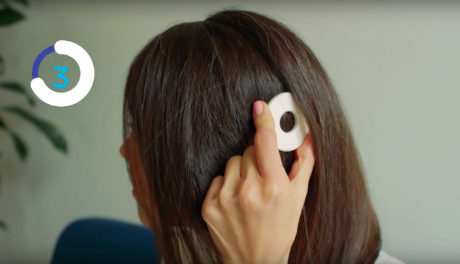
Using Your Remote Monitor

The wand and remote monitor allow you to collect information from the neurostimulator and send the information to your doctor.

vertical line

Using Your Magnet

The RNS magnet enables you to record brain activity when you choose, such as when you are experiencing a seizure. Following your physician’s instructions and the Patient Manual, swipe the magnet over the neurostimulator to instruct it to record.

head scan

Cómo usar el monitor remoto

La vara y el monitor remoto le permiten recopilar información del neuroestimulador y enviársela a su médico.

vertical line

Cómo usar el imán

El imán RNS le permite registrar la actividad cerebral durante los episodios que desee, como una convulsión. Siga las instrucciones de su médico y el Manual del Paciente para deslizar el imán sobre el neuroestimulador a fin degrabar la actividad.

Manuals and Safety

Patient Manual
RNS-320 MRI Safety Information

Remote Monitor Model 5100

Manual
Quick Reference

Remote Monitor Model DTR-300-E (Ethernet Connection)

Manual
Quick Reference

Remote Monitor Model DTR-300 (Dial-up Connection)

Manual
Quick Reference

Current Patient FAQ

How does the RNS System work?

Similar to a pacemaker that monitors and responds to heart rhythms, the RNS System is the first and only medical device that can monitor and respond to brain activity. The RNS System constantly monitors your brainwaves, detects unusual activity that may lead to a seizure, and responds within milliseconds by sending brief pulses to disrupt this unusual activity.

Will I feel the stimulation?

When your doctor programs the device to the correct settings for you, you should not feel or notice stimulation. On average, the total amount of stimulation delivered by the RNS System adds up to approximately three minutes per day.

Nair, et al. Neurology, 2020.

Does the effect of the RNS System wear off?

No. Experience over many years shows seizure reduction continues to improve over time.

Will I be able to stop taking my anti-seizure medications?

The RNS System is considered a complementary treatment to your medications. Any change in your medications would be determined by your doctor.

Nair, et al. Neurology, 2020.

How often should I use my remote monitor?

NeuroPace recommends you transfer data from the neurostimulator to the remote monitor at least once a day, as well as after a seizure. You should transfer data from the remote monitor to a secure database at least once per week. It is important that you talk to your physician about how often they would like you to use your remote monitor.

How often does the battery have to be replaced?

The estimated battery life of the RNS-320 Neurostimulator is nearly 11 years*. This means that on average you will likely be able to go over a decade after your procedure before needing a Neurostimulator replacement. Since battery life depends on your individualized settings, some people may have a shorter battery life, while others may have more than 11 years of battery life.

To find which RNS System model you currently have, please refer to your RNS System ID card, or call your doctor’s office. Consult the Patient Manual for more information.

*FDA-approved labeling reflects an estimated 10.8 years of battery life at medium settings.

How and when do I use the magnet?

The magnet is used to tell the neurostimulator to record brain activity when you are experiencing a seizure. The RNS System is programmed by your doctor to monitor, record and respond to your unique brain activity on its own, but swiping the magnet works like a highlighter, pointing out an event for your doctor to easily identify when reviewing your data. Your doctor is then able to make adjustments to optimize your treatment as needed.

Can I get an MRI?

Individuals who have the model RNS-320 Neurostimulator are eligible for MRIs under certain conditions. People with the model RNS-300M Neurostimulator CANNOT receive an MRI.

Learn more

I am going on a trip and will be traveling by plane, will I have a problem going through airport security with my device?

Airport scanners will not damage the system but could cause or temporarily disrupt stimulation. You may want to let TSA personnel know that you have an implanted medical device by showing them your Medical Implant Identification Card. You may also want to bypass a body scan and opt for a pat-down security inspection. You can find more detailed instructions in the “Traveling with the RNS System” section of your Patient Manual.

Learn More

I still have more questions, who can I talk to?

Our NeuroPace Patient Education Team is here to answer your questions and help you get the information you need. To reach our patient education team, please call (888) 646.8483 or email connect@neuropace.com


  • Safety Information
  • Legal
  • Privacy Policy
1-866-726-387624-hr Support Line

PATIENTS

  • Drug-Resistant Epilepsy
  • The RNS System
  • Hear from Patients
  • Is It Right for You?
  • Current Patients
  • Resources

PROVIDERS

  • Product
  • Clinical Benefits
  • Actionable Insights
  • Patient Selection
  • Education & Training
  • Resources

ABOUT US

  • In The News
  • Press Releases
  • Leadership
  • Careers
  • Contact Us
  • FCOI Procedure
  • PATIENTS

    Safety
  • PROVIDERS

    Legal
  • INVESTORS

    Privacy Policy
  • ABOUT US

1-866-726-3876 24-hr Support Line

© 2026 NeuroPace, Inc..

Step 1 of 7

14%
    The RNS System is for individuals 18 and older who have focal epilepsy and have tried two or more medications without finding seizure control.
  • Based on your answers, your patient might benefit from the RNS System.

    Get your profile and a list of questions to ask your doctor.

  • Unfortunately it appears your patient is not an appropriate candidate for the RNS® System at this time.

  • The RNS® System is intended for patients who have undergone diagnostic testing that localized no more than 2 epileptogenic foci.

    If your patient has not undergone diagnostic testing, search here to find a comprehensive epilepsy center that can evaluate your patient, including determining if the RNS System is right for them.

  • If you are interested in learning more about the RNS® System, you can have an RNS® System professional contact you by filling out the form below:

  • By filling out this form, you are agreeing to the terms of our privacy policy. This form is intended for US residents only.

    By clicking submit, you are agreeing to receive communications from NeuroPace. You can unsubscribe at any time.

    * Required fileds

Share your Story: Terms and conditions

By filling out the form and submitting your story (and/or photograph), you are agreeing to the following:

  1. NeuroPace may review the information and any photographs you provide for potential publication on our website.
  2. If NeuroPace decides to use your story, we will contact you and ask you to sign a release for a version of your story to be used on the NeuroPace website, Facebook, Instagram, Twitter and/or LinkedIn. Unless you sign the release, we will not publish the story, your name, or the photographs you provided.
  3. Regardless of whether we publish your story, we will add your name and e-mail address to the NeuroPace email list to hear from us about product updates, upcoming events and other relevant information. We will not sell your information to third parties. 
  4. Our use of your information is subject to our Privacy Policy, which you can access here.
neuropace logoLogo Header Menu
  • Patients
  • Providers
  • Corporate
  • PDMS
  • nSight
  • Take the Quiz