
Choosing Neurostimulation for Epilepsy Treatment
July 20, 2022Reading Time: 5 minutes
Key Takeaways
- Featuring pulses of electricity, neurostimulation has a long history of use for a range of neurological conditions.
- Neurostimulators can help control seizures when medications aren’t enough, providing a focused therapy that provides an option to removing or destroying brain tissue.
- Clinical trials proved neurostimulation’s safety and effectiveness, with three devices gaining approval from the Food and Drug Administration (FDA). Each takes a particular approach and has unique factors to consider.
What is neurostimulation?
Neurostimulation sends pulses of electricity to nerves or brain cells called neurons, to affect the way they communicate. Doctors have long used this therapy to treat neurological conditions, starting with chronic pain and movement disorders such as Parkinson’s disease.
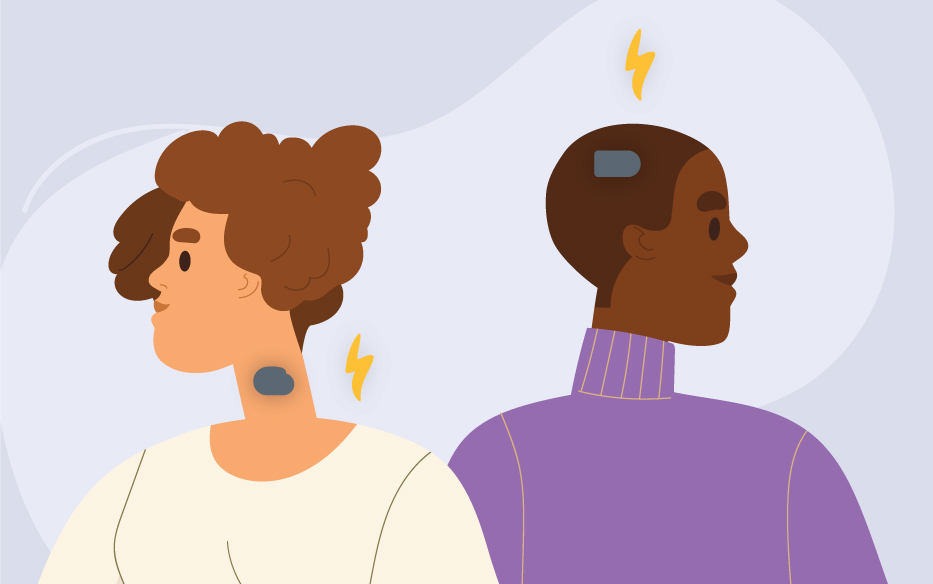
In recent decades, advances led to the development of neurostimulators — small, battery-powered generators placed in the body. These devices deliver a mild electrical pulse and sends it along thin wires to treatment targets.
Doctors discovered neurostimulation’s potential for epilepsy control in the 1950s, while developing ways to evaluate the condition and treat it with surgery. It appeared that electrical pulses could stop unusual electrical activity among neurons that caused seizures.
After years of research, clinical trials started, eventually proving the safety and effectiveness of three devices:
- Vagus nerve stimulation: In 1996, VNS Therapy gained the first approval from the FDA. The generator goes under the skin in the chest, with wires running to the vagus nerve in the neck. Electric current follows the nerve’s pathway to the brain before spreading out. VNS builds on a long-established relationship: Triggering the vagus nerve can stop some seizures.
- Responsive neurostimulation: The RNS System received FDA approval in 2013. It remains the only device that stops seizures before they start by directly targeting the source of seizures with stimulation. Wires go in one or two areas of the brain (wherever they’re needed), while the generator is placed just under the skull. Data collected by the system and reports from people using it continue to indicate the effectiveness of this approach.
- Deep brain stimulation: After earlier approvals for movement disorders, DBS received FDA approval for epilepsy in 2018. The generator goes under the skin in the chest, with wires leading to a brain region called the anterior thalmus. Scientists believe this area plays a role in seizures spreading, regardless of where they start.
The devices share some basic distinctions from medications, which are typically the first line of treatment for epilepsy:
- Medication depends on how much of the dose remains in the bloodstream.
- Medications travel throughout the body and can cause a range of side effects. Neurostimulation focuses on the brain and nervous system.
Choosing the most appropriate neurostimulation therapy for drug-resistant epilepsy
The choice of neurostimulation device depends on your personal preferences, your treatment goals, and the nature of the seizures. A doctor specializing in epilepsy can help you determine which treatment might work for you. Each option offers different factors to consider. (Learn more about RNS System versus VNS and DBS).
For example, VNS may cause hoarseness, and delivers stimulation you may actually notice.
Neither RNS System nor DBS deliver noticeable pulses, working quietly in the background as you go about your daily routine. “I almost forget that I even have it in,” Carlo says of his RNS System. “When it picks up abnormal activity, the device will activate, but I don’t feel a thing.”
Deciding between neurostimulators that directly treat the source of your seizure: The RNS System and deep brain stimulation for epilepsy
Specialists at comprehensive epilepsy centers can recommend neurostimulator options that meet your specific needs. Everyone experiences seizures differently, so therapy results can vary. Generally, though, there are a few aspects to keep in mind if you’re trying to decide between the RNS System and DBS:
- Safety and effectiveness: Both devices provide an improved level of seizure control, and both improve quality of life. The RNS System was designed to treat epilepsy and has been approved by the FDA to specifically treat focal epilepsy. “As I read studies in medical journals, I became more confident in the research behind the device,” Chrissy of Colorado says of her RNS System.
- Seizure source: Researchers continue to explore ways to further improve DBS and RNS System and expand how each is used. Both DBS and the RNS System are approved for seizures that are diagnosed as beginning in one or two locations.
- Approach to therapy: DBS delivers pulses at intervals pre-set by doctors, regardless of what’s happening in your brain. In contrast, the RNS System constantly monitors the brain, intervening only when unusual electrical activity is detected. (On average, stimulation adds up to three minutes per day.) The RNS System is unique in that it allows doctors to customize your treatment to both your unique electrical patterns and the type of pulses required. And only the RNS System can be used to monitor brainwave and seizure activities, which may allow you and your physician to use this data to monitor triggering events for your epilepsy, or understand how your medication is working.
- Appearance: With DBS you may notice the generator and wires under bare skin, as the actual neurostimulator device is typically placed under the skin in your upper chest . With the RNS System, the technology is less visible. “People looking at me would never know, unless I told them,” says Chris, who received the RNS System in 2018.
Regardless of your choice, Kim of Tennessee recommends patience. She uses the RNS System and says progress proceeds at different paces for different people. Neurostimulation eventually gave her seizure control and “turned my life around,” she says.
“It’s made me happier and boosted my self-esteem,” Kim says. “I can say that I have epilepsy, but epilepsy doesn’t define me.”
Sources
- Brain stimulation therapies for epilepsy: National Institute of Neurological Disorders and Stroke
- Nine-year prospective efficacy and safety of brain-responsive neurostimulation for focal epilepsy: Neurology
- Critical review of the responsive neurostimulator system for epilepsy: Medical Devices
- Neurostimulation in the treatment of epilepsy: Epilepsy Foundation
- Brain stimulation treatments in epilepsy — basic mechanisms and clinical advances: Biomedical Journal
- What is vagus nerve stimulation: Epilepsy Foundation
*Every person’s seizures are different and individual results will vary

