
How The RNS System Works
Seizures Start in Your Brain. That’s Where They Should Stop.
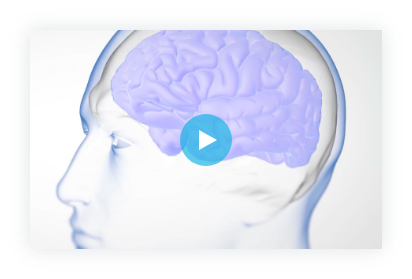
The RNS System is a treatment for adults with drug-resistant focal epilepsy. Your doctor personalizes it to respond to your brain activity, delivering the treatment you need, when you need it.
Monitors
It monitors brain activity continuously.
Recognizes & Responds
It is programmed to recognize a person’s unique seizure patterns, and automatically responds to prevent seizures before they start.
Records & Reports
It records and reports EEG data to help doctors personalize patient care.
Fewer Seizures, More Living
In a real world study, RNS System patients reported experiencing fewer seizures.1
Significant Seizure Reduction

Median seizure frequency reduction at ≥3 years

More Seizure-free Days

~1 in 5 patients were seizure-free at their last check-up
Lower SUDEP Rate
SUDEP is the sudden, unexpected death of someone with epilepsy, who was otherwise healthy.2
RNS System patients in a 9-year study showed a significantly lower SUDEP rate3
Improved Health and Wellness
In a clinical study of the RNS System, patients reported significant quality of life improvements.4

Improved Physical Health

Improved Mental Health

Less Seizure Worry

Improved Cognition
1. Razavi, et al. Epilepsia. 2020. 2. Epilepsy Foundation Website, 2021. 3. Nair, et al. Neurology 2020. Lower SUDEP rates relative to comparable refractory population. 4. Meador, et al. Epilepsy Behav. 2015
“I Would Do it Again”



Drew
Leona
Meaghan
Every person’s seizures are different and individual results will vary.
FAQ for Prospective Patients
How does the RNS System work?
Similar to a pacemaker that monitors and responds to heart rhythms, the RNS System is the first and only FDA-approved epilepsy neurostimulation device that can monitor and respond to brain activity. The RNS System constantly monitors brainwaves, detects unusual activity that may lead to a seizure, and responds in real-time by sending brief pulses to disrupt this unusual activity.
Who is a candidate for the RNS System?
The RNS System is for individuals aged 18 and older who have tried at least 2 anti-seizure medications but still suffer from frequent and disabling focal (partial onset) seizures that come from one or two areas of the brain. Talk with your doctor to find out if the RNS System is right for you.
Will I be able to stop taking my anti-seizure medications?
The RNS System is considered a complementary treatment to your medications. Any change in your medications would be determined by your doctor.
When should I consider the RNS System?
Studies have shown that if you have tried two anti-seizure medications without achieving seizure control, there is a less than 5% chance that your seizures will be controlled on another medication. If you have failed two medications and still suffer from seizures, it may be time to ask your doctor about other treatment options, including the RNS System.
Chen, Z., et al. JAMA Neurology, 2018.
Is the RNS System covered by insurance?
The RNS System is broadly covered by most private and government insurance.
Can I expect to be seizure free?
Although you should not expect seizure freedom from the RNS System, a subset of patients report experiencing seizure-free periods.
In 9-year clinical study:
- 35% of patients achieved ≥ 90% seizure frequency reduction*
- 28% of patients had at least one ≥ 6 month period with no seizures
*during last 6 months of follow up, at 9 years
Nair, et al. Neurology, 2020.
What are the side effects of the RNS System?
The primary side effects associated with the RNS System are those that are related to any surgical procedure, such as risk of infection or bleeding. However, the RNS System does not cause the chronic side effects associated with many anti-seizure medications such as dizziness, drowsiness, depression, or confusion. It also does not have the ongoing stimulation-related side effects that can be associated with vagus nerve stimulation, such as hoarseness, shortness of breath, sore throat, or coughing. Consult with your doctor about the full risks and benefits of the RNS System and see the RNS System Safety Information.
LivaNova VNS Therapy System Epilepsy Physician’s Manual, May 2020.
Heck, et al., Epilepsia, 2014.
Will I feel the stimulation?
When your doctor programs the device to the correct settings for you, you should not feel or notice stimulation. On average, the total amount of stimulation delivered by the RNS System adds up to approximately three minutes per day.
Nair, et al. Neurology, 2020.
Does the stimulation effect wear off?
No. Experience over many years shows seizure reduction continues to improve over time.
Nair, et al. Neurology, 2020.
Does the procedure involve brain surgery?
When doctors talk about epilepsy surgery, or brain surgery, they are often describing the removal of a portion of the brain that is causing your seizures. Similar to traditional epilepsy surgery, the RNS System targets the part of your brain that is causing the seizures. However, unlike epilepsy surgery, the surgical procedure to place the RNS System does not involve removing any brain tissue.
Will people be able to see that I have the RNS System?
Once the RNS System is placed, it is not visible to you or anyone else.
Where is the RNS System available?
The RNS System is currently available at most Comprehensive Epilepsy Centers (CECs) throughout the United States. CECs are specialized epilepsy centers that have a team of experts who can provide a complete evaluation for epilepsy patients, along with extensive medical, interventional, and surgical treatment options.
How long will my RNS System battery last?
The estimated battery life of the RNS-320 Neurostimulator is nearly 11 years*. This means that on average you will likely be able to go over a decade after your procedure before needing a Neurostimulator replacement. Since battery life depends on your individualized settings, some people may have a shorter battery life, while others may have more than 11 years of battery life.
To find which RNS System model you currently have, please refer to your RNS System ID card, or call your doctor’s office. Consult the Patient Manual for more information.
*FDA-approved labeling reflects an estimated 10.8 years of battery life at medium settings.

